

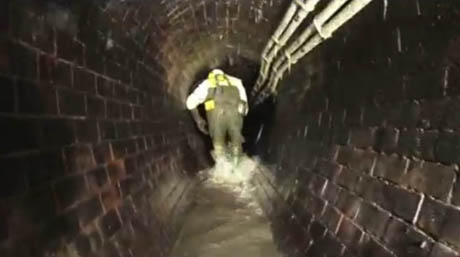
IMAGE: Rob Smith, suited up and ready to descend into London’s sewers. All images in the post are screengrabs from The Guardian’s video.
Rob Smith rejoices in the glorious job title of head flusher at Thames Water, the water supply and sewerage utility that serves Greater London and much of the South-East. Last month, The Guardian followed him down into the sewers beneath the city, and the resulting video is well worth a watch.
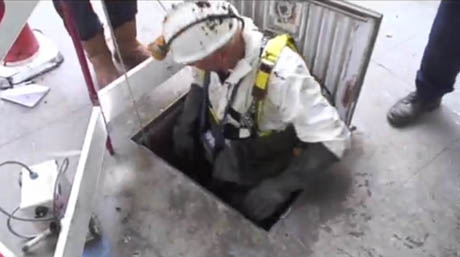
Descending into the city’s bowels in Northumberland Street, just off the Strand, Rob tells The Guardian that he has experienced needle-stick injuries, and once found a hand grenade in the high-level sewers, but, on the whole, “It’s a nice working environment.”
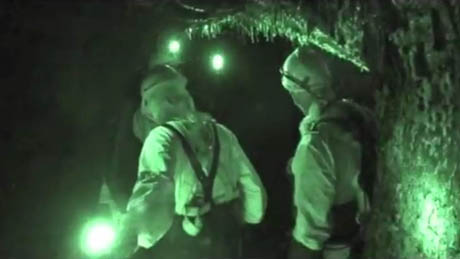
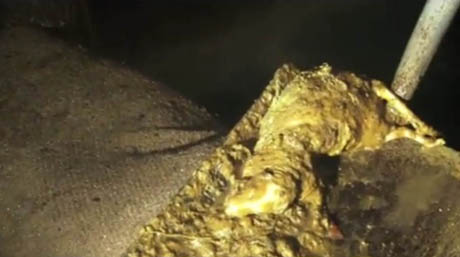
The utility’s thirty-nine flushers, whose job is to keep the sewers flowing, all carry gas monitors and emergency breathing kits, as methane and hydrogen sulfide poisoning are a constant risk. Their main adversary are “fatbergs”—solid blockages made up of cooking oil and wet wipes.
With the air of a connoisseur, Rob uses his shovel to point out the difference between congealed “old fat” and more yellow-toned “new fat,” picking out rats, condoms, and the offending wet wipes, which remain intact throughout their journey, and which, “believe it or not, we have to wash and compact and put into landfill.” The rest of the fatberg will be broken up using a jetting unit, which simply “stirs it up and blasts it through.”
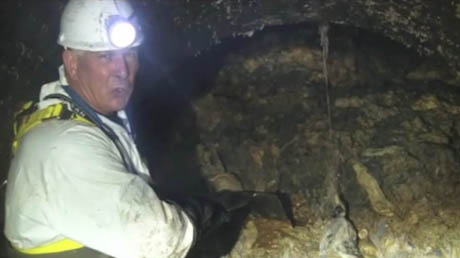
As Rob narrates his way through the tunnels, it becomes clear that the flushers have detailed and intimate mental map of the city. One of the worst areas for fatbergs, for example, is Leicester Square, where cheap restaurants illegally dump used cooking oil. Earlier this summer, the flusher team removed enough congealed fat to fill nine double-decker buses from a mile-and-a-half of sewer beneath the area.
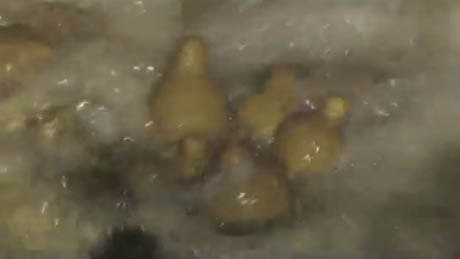
When The Guardian journalist points out a patch of condoms poking their heads out of the water like pigs teats, Rob is blasé:
The air traps up inside them and they just blow up, and that’s it. You’re at the bottom end of Piccadilly now, so it’s that sort of area, innit?
Conversely, Rob mentions that in some exclusive areas of London, “you can pick up the smells of some rather expensive bath oils.” In fact, without ever needing to see the sun, the sewer flushers have their own environmental clock: Rob notes that as the city takes its morning shower, the “perfume smell” in the sewers becomes quite overpowering, while Monday morning is a popular time for housework, with bleach flowing into the sewers from thousands of toilets and sinks.
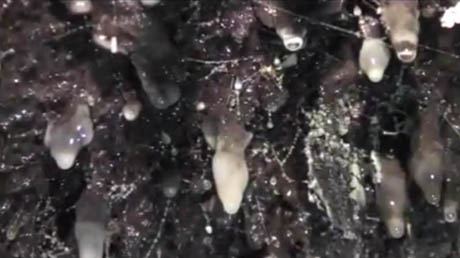
The sewers also form their own ecosystem, with “something fungal” growing on the ceiling, and a healthy population of rats. In a moment that makes you appreciate the distance provided by a computer monitor, Rob brandishes a dead rodent on his shovel as he explains that rats can’t hold their breath for very long, and since just two millimetres of rainfall is enough to take London’s 150-year-old sewer system into storm mode, they are frequently caught in sudden surges and drown.
If the ways in which a city is supplied with food are often hard to visualise, the infrastructure through which that food, transformed into metabolic excretions, is once again removed are usually even better hidden. London’s flushers have a unique perspective on the patterns and peculiarities of urban digestion—and fascinating as it is, I sense The Guardian’s short video represents just the tip of Rob’s arcane knowledge of the city’s underbelly.
[NOTE: For another perspective on the infrastructure of water and human waste hidden beneath our cities, don’t miss my interview with Julio the Sewer Diver from Postopolis! DF.]